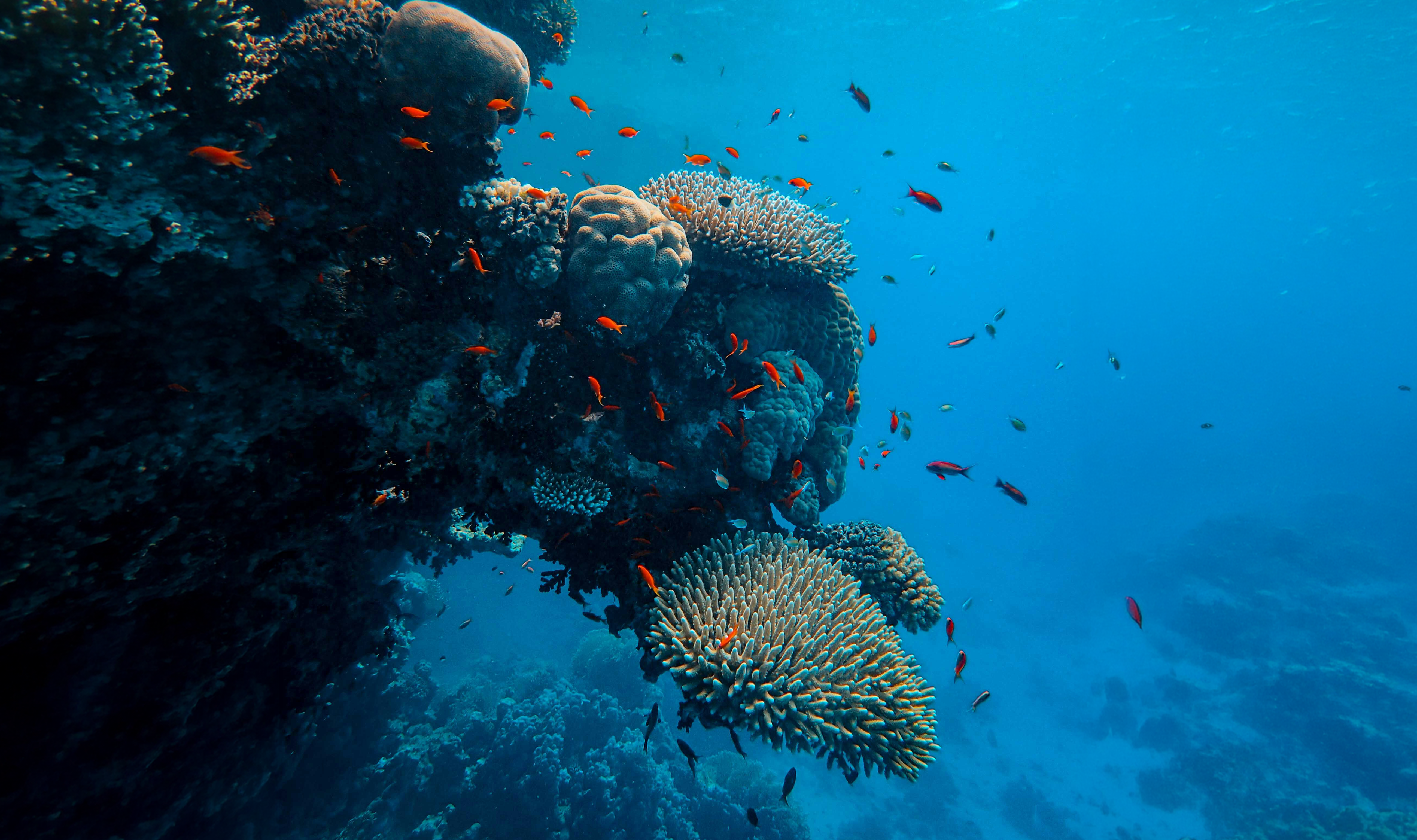
A field study combining immersive VR technology with environmental economics — investigating how experiencing the reef up close changes what people believe it is worth protecting.
Overview
The Great Barrier Reef is the largest living structure on Earth — and one of the most threatened. Our research team is travelling to Australia to capture never-before-seen 8K 360° footage of reef systems across the Queensland coast, working with local dive operators and marine conservation partners on the ground.
This footage will become the centrepiece of a major study investigating how experiencing the reef in virtual reality changes what people believe it is worth protecting — and how much they'd be willing to do about it. We believe that seeing is believing: when people truly experience what's at stake, conservation decisions change.
660 participants across Australia will take part in the study, putting on a Meta Quest 3 headset and diving into the reef before answering questions about conservation value and willingness to support reef protection. The results will directly inform policy advice to environmental agencies in both the UK and Australia.
Research Methodology
Participants are randomly assigned to one of three treatment arms: a standard documentary film about the reef, a flat 360° video viewed on a phone screen, or the full immersive Meta Quest 3 VR experience. After viewing, all participants complete a willingness-to-pay survey based on the OECD's SWACHE stated preference methodology.
The split design lets us isolate the effect of immersion itself — not just the content — on environmental valuation. We can compare WTP estimates across conditions and identify which aspects of the VR experience (spatial presence, scale, visual fidelity) drive the largest shifts in conservation attitudes.
All data collection follows UKRI ethics protocols. Survey instruments have been piloted and validated against established non-market valuation benchmarks. Results will be submitted to peer-reviewed journals and delivered as policy briefings to DCMS and the Australian Department of Climate Change, Energy, the Environment and Water.
Field Research Schedule
Why It Matters
Coral reef systems provide an estimated $375 billion per year in goods and services to hundreds of millions of people. Yet standard economic valuation techniques — contingent valuation, hedonic pricing — have consistently struggled to capture the full extent of this value, because most people have never seen a reef and cannot imagine what is being lost.
Immersive VR offers a new tool: it can make the invisible visible. If our study confirms that first-hand virtual experience drives meaningful increases in conservation WTP, it has direct implications for how governments and conservation bodies present environmental evidence to the public and to policymakers.
All data, code, and analysis scripts will be published under open-access licences. The 360° footage library will be made freely available to educational institutions worldwide via the EarthIn360 platform.